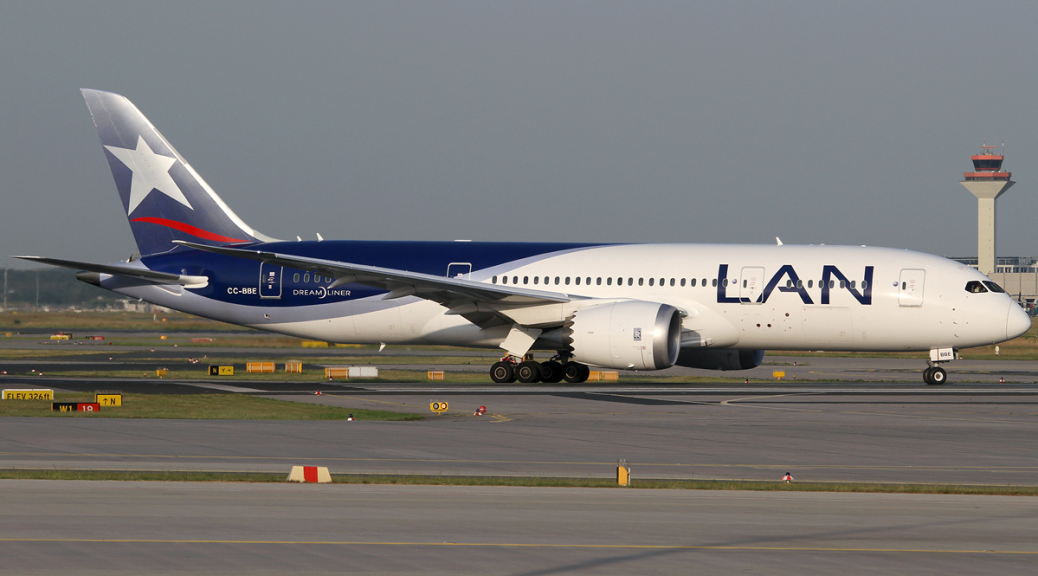
Aisle or Window?

Posted by Tom in In the News, Various on Monday, 5 April 2010

Aisle or Window seat?

Aisle or a window seat? I’m sure many of you think about this question already at home weeks before your actual flight. All of us passengers have to make a choice at some point though and I’ve seldom heard anyone saying they are indifferent about their seat selection. I, for example, have a rule where on short flights of 5 hours or less I will always want a window seat, but on long-haul flight I prefer the aisle.

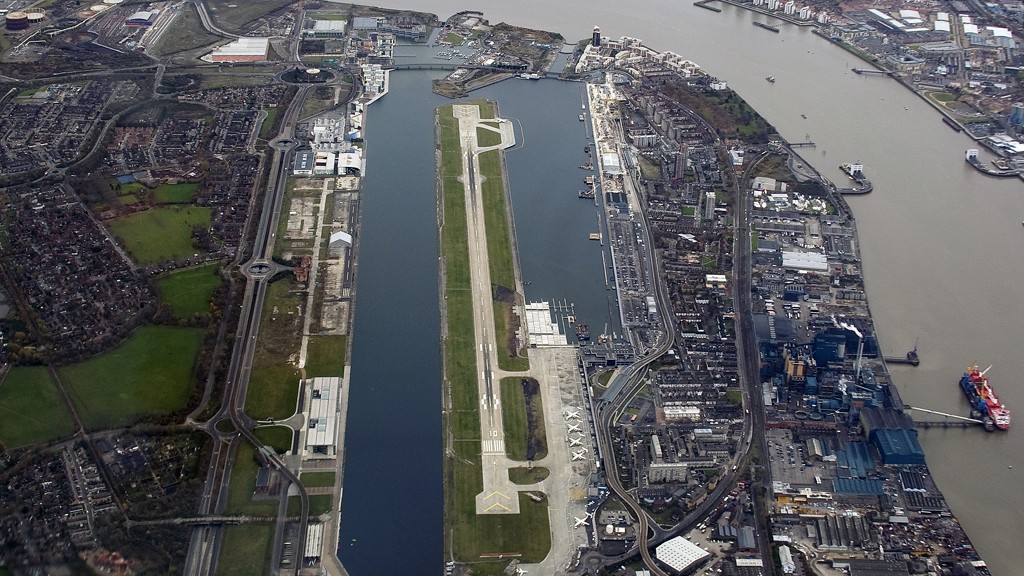
Mark Vanhoenacker will always choose the window seat though. Mark is pilot, but that’s not the point, obviously in the cockpit he has a window in front of him, but Mark goes for the window seat every time he sits in the back of an aircraft too. And no, not for safety reasons, simply because he enjoys the magnificent views one is often presented on landing at many of the world’s airports.

In the New York Times, Mark recently wrote about his experience in the window seat and what you can view on what destination:

While all frequent fliers will have their favorites, some cities are perennial winners. Passengers flying to San Francisco, for example, are regularly treated to marvelous views of its bridges, hills and microclimates.

Read everything in the full article. You can also submit your own window seat views here. A selection of pictures will be published on the 25th April.

Picture by LateDeparture.com – all rights reserved.


Chocolate Fest at Zurich Airport

Posted by Tom in Airports, Europe, Various on Tuesday, 30 March 2010

Chocolate Heaven at Zurich Airport

Well, this isn’t actually news as Zurich Airport’s Chocolate Fest has been going on since the 19th February. But it did catch my eyes this time while travelling through the airport. Why? No, not because I felt a sudden chocolate rush and would have had to try all the yummy offerings from Lindt, Toblerone, Frey or Sprüngli (honestly!), it was because I discovered this chocolate art creation you see in the picture: Australia in chocolate. I’m actually emigrating to this country next month, so it fit very well. Next to the Australian icons you can also discover other countries’ themes made of, you guessed it, chocolate. It’s worthwhile going for a quick tour so that you then at least have an excuse to try those “god forbidden” Sprüngli truffes…

The exhibition continues until the 5th April and you can find it in the transfer & shopping area A at Zurich airport. The Sprüngli truffes can be enjoyed even beyond that date at their airport store in A and E.


BBC’s Top Gear tests airport vehicles

Posted by Tom in Various on Wednesday, 9 December 2009


BBC’s top rated car motorshow “Top Gear” ran an interesting feature about airport vehicles in their latest show on Sunday (series 14, episode 4). There, Richard Hammond, one of the hosts of the show alongside Jeremy Clarkson and James May, conducted a race of various airport vehicles in order to determine which one the fastest is and therefore which one the model for all other airport vehicles should be.

If you know the show, then you also know that they don’t take tests like this very serious in terms of “accuracy”, but rather make it very visual and entertaining. It’s definitely worthwhile watching.


Five things Alain de Botton learned at Heathrow’s T5

Posted by Tom in Airports, Europe, In the News, Various on Wednesday, 30 September 2009

Alain de Botton

The Guardian yesterday published five things Alain de Botton learned from spending a week in Heathrow‘s terminal 5. BAA hired the Swiss philosopher a month ago and granted him unlimited access to all areas in the terminal. Here is what he found:

1 A surprising number of people die at Heathrow every week: around two a terminal. The 20 minutes after you’ve got off the plane are especially hazardous to your constitution. Then again, given the tenderness that parting couples show one another at the barrier, the prospect of death en route can do wonders for any fractious relationship.

2 There’s a British Airways check-in employee at Terminal 5 who, if you manage to be especially rude to her, will pretend that her machine has suddenly designated you for an upgrade. Then, just as she observes your scowl turn into a deferential smile, she will take a second look at her screen, sigh empathetically and announce that sadly the system has mysterious changed its mind and there won’t be an upgrade after all. “That’s a lesson that normally lasts a lifetime,” she reckons.

3 It’s a good deal more interesting to study how an airline meal is made than to eat one. Every weekday at around 4am, a mile from Terminal 5, in an aluminium shed owned by Gate Gourmet, a woman called Leyla sets to work grilling the hundred lamb cutlets that will, a few hours later, face Emirates business-class passengers on EK008 to Dubai.

4 What spoils our experience of airports is that we tend to go there only to catch a flight. We’d be wiser to start going with a view to doing nothing other than have a look around, as people used to do in the 1960s – and which we will probably have to relearn to do, as we wake up to the extraordinary environmental impact of even the most advanced aeroplane engines.

5 To judge by the continuing success of airport-based company Caviar House, homo sapiens manifests a special proclivity for the creatures of the sea as it prepares to take to the skies. Our sea-based appetites perhaps result from a semiconscious desire to savour man’s triumph over both the oceans and the skies, the overworld and the underworld, this duality perfectly reconciled in a man who can in the same afternoon eat a dozen oysters and board a 747 to another continent.

Alain de Botton’s new book, “A Week at the Airport” is out now (Profile Books, £8.99). In addition, Passengers can get one of 10,000 exclusive copies distributed for free at Costa Coffee stores in all 5 London Heathrow terminals.

[Picture from the Guardian]


Interview: Air Traffic Controller from Geneva Airport

Posted by Tom in Airports, Various on Friday, 26 June 2009

Air traffic controllers at their stripless workstations, UAC West, Geneva
LateDeparture.com is proud to have secured an interview with Daniela, an experienced Air Traffic Controller from Geneva airport. She provides us with interesting insights about her job, the stress levels and where she thinks air traffic volumes are heading towards. Plus she provides us with her favourite airport tips.

How did you become a Air Traffic Controller (ATC)?

After a few psycho-technical and job related tests, SKYGUIDE (former swisscontrol) proposed me to join a 36 months lasting student course.

The first year, I had a lot of theory lessons about legislation, aerodynamics, aircraft recognition and other ATC subjects followed by a period of simulator training.

Then, all the students (around 40) of my class were transferred to the final location, either Geneva, Zurich, Bern or Lugano. We had also few students working for military airports.

After two more years of on the job training, under surveillance of a confirmed and trained coach, I got my license to work alone on the different sectors at the tower and approach-sector in Geneva.

Can you explain our readers what your job involves on a day to day basis?

In my daily business I am always member of a team working in changing shifts.

In the Tower or Aerodrome Control, our team has to supervise the entire airport’s taxiing, takeoff and landing operations, as well as handling all the airborne traffic in the airport’s immediate vicinity.

In Approach Control, we guide all approaches and departures within a radius of around 50 kilometres from the airport. This includes managing and monitoring departing flights as they climb to their assigned levels and airways, and assisting aircraft down until they are handed over to the Tower.

Many people regard your job as a very stressful one with a lot of responsibility, do you see it this way too?

It can be very stressful, for instance on high loaded days as during the summer holiday period.

But, to hand over to an other colleague at the end of my shift, is the hugest advantage of my job. At the end of my working day I do not have to worry about ongoing folders as someone else is taking on the traffic.

During the years you have worked in your job, the air traffic volume has increased steadily, did your workload increase in parallel to that?

Yes, it increased constantly, but not at the same rate as the traffic volume. Compared to the nineties we have a lot more technical help, the systems are in a constant evolution to assist us in an optimal way.

As this blog is about what you can do at airports when your flight is delayed, one obvious question is, what areas can Air Traffic Controller influence in terms of punctuality or delay in terms of a specific flight?

Obviously, every ATC is always doing his best to expedite the traffic flow.

We try to optimize constantly the speeds of the arriving traffic in a way to permit to get in-between each arrival at least one departure out. This is by the way a specificity of Geneva as we are one of the busiest airports with one single runway in use.

For the slot management we do not have a lot of possibilities to act on, as we are only one of many handling a flight.

Each sector treating a flight from the departure airport to the final destination has a certain capacity, meaning an amount of traffic it is able to handle at a given time at the given conditions.

This capacity depends on the weather conditions, the staffing, the availability of navigational aids and technical installations.

For all flights anywhere in Europe, the routings are collected in a central computer at Brussels where they are compared and so called departure slots are distributed to flights which risk to be in a traffic congestion.

This flights are then held on ground instead of being kept longer in the air in a traffic jam.

Can you illustrate a specific example for Geneva airport where a situation led to delays? What did you (have to) do about it?

One obvious example creating delay is a runway closure, for instance in winter time, when snow clearing becomes necessary. Then, the fire brigade needs around half an hour to remove the snow on a large width and the whole length of the runway.

As well in winter, the time needed on ground for the aircraft can be increased for deicing procedures. The aircrafts have to be cleared of ice and snow which could cause too much resistance during flight enabling the aircraft to fly properly.

But the most common reason for delay is the overload of sectors, as all the companies want to have the same arriving times at their destination. For example, a lot of businessjets plan to arrive on time for the first meetings in the morning, so you create the same traffic jams as you find on the road on the way to your office.

Clearly safety is the biggest priority in your job, but do you also get measured on timeliness of arriving and departing aircrafts?

Yes, we do get regularly feedback on our performance in terms of delay.

There exists a so called “hit-list” of the worst airports in Europe where Geneva figures on as number 17 with an average delay of around 0.34 minutes per flight for the 175’863 handled flights in 2008. 95% of all flights were able to respect their schedule on time.

What would your suggestion be for improving flight punctuality in general?

As a passenger you can contribute to more punctuality by being ready early enough at the gate. This measure helps the companies to leave the stand on time and meet the given departure slot.

If a flight is delayed due to a missing passenger, the company has to announce the delay to the flow management and the departure slot is lost. As it is a last-minute change, this flight will get the next available slot which can be hours later. The principal of the slot allocation is always “first come, first served”.

The second suggestion would be to be patient, as a flight is much safer, economically and ecologically while waiting on the ground than doing holding patterns close to the overloaded destination.

You have probably come across many airports in your life as well, do you have a personal favorite and if so, what makes that airport special?

Of course Geneva Cointrin is one of my favorites, as you can get one of the best coffees and chocolates at “MARTELS confiseur” close to the arrival hall. It is also famous for its “pavé de Genève”, a chocolate speciality.

An other airport I like a lot is Copenhagen [read our reviewed here] , people are very friendly and from an operational point of view, the two parallel runways and the very flat topography are a huge advantage for expediting the traffic.

Thank you very much, Daniela, for your time answering all our questions!

[Picture from Skyguide]


Guestblog: How airports prepare for emergencies

Posted by Tom in Airports, In the News, Various on Tuesday, 2 June 2009

The disappeared Airbus A330-203 from AIR FRANCE with the registration F-GZCP

The recent disappearance of Air France Flight 447 off the coast of Brazil raises the question of how airports prepare and handle emergencies. Although the A330 did not send out a distress call, or was able to return, or divert to a nearby airport, airports are prepared for such events, and have very strict protocols of how to deal with various emergencies that occur on the airfield.

All FAA Part 139 airports in the United States are required to have an Airport Certification Manual with an outline of procedures for response teams, such as ARFF (Aircraft Rescue Fire Fighting), law enforcement, and airport operations in order to respond to emergencies ranging from aircraft alerts to medical situations. Airports in other countries that are regulated or lease any part of the airfield from the government will have similar regulations in place. An airport needs to be regulated and occasionally audited to ensure that airport staff is adequately trained to deal with such emergencies.

Flights that have been victim of a hijacking, bomb threat, or mechanical failure are serious instances that require special training. Typically, when a Captain receives notice of a bomb threat or hijacking, the aircraft will land immediately and airport officials will direct the aircraft to a safe and unpopulated area of the airfield. Law enforcement officials will be escorted to the aircraft where they will take incident command and proceed with their own procedures.

When Hurricane Katrina struck Louisiana, the city of New Orleans did not have a plan of scale to evacuate elderly residents and those without transportation. The city, which owns the airport has devised an emergency plan, with the help of a private company, and approved by government officials is now in place for the next potential hurricane. The plan includes preferred routes for traffic flow into the airport facility for those being bused or flown out.

Air France Flight 447, an Airbus 330, was flown into a strong storm off the coast of Brazil where it suffered from severe turbulence and a possible lighting strike which may have induced an electrical failure, ultimately causing it to go down. The flight crew reportedly never declared an emergency, but if they were closer to the shore and were able to glide with or without power to a nearby airport, it would have been classified as an Alert III, the most serious of all aircraft emergencies. The airport would be responsible for responding with ARFF and medical teams to evacuate passengers and crew. If the plane were disabled and crippled on the runway, the airline or owner would be responsible for removing it at their cost. The cost of removal is never the responsibility of the airport, but if an actual large scale crash does occur in the vicinity of the airport, a closure is imminent until it can be cleared.

[Article provided by Jeffrey from Airport Chronicles exclusively for LateDeparture.com - Picture shows the disappeared Air France jet with the registration F-GZCP and comes from Flickr, some rights reserved]


Hello 2009 – Hello Kitty Lounge

Posted by Tom in Airports, Asia, Various on Tuesday, 6 January 2009

Well, nothing is impossible and that definitely holds true for Asia: Terminal 2 of Taiwan’s Taoyuan International Airport (IATA: TPE) features a full-blown Hello Kitty Lounge with adjacent – wait for it – Hello Kitty souvenir shop. Apparently you can even board some planes directly from the lounge. I guess one of these planes here. Up to you now to decide whether that’s a great sign of what we can expect at airports in 2009 or not…

[Original Post from the Hello Kitty Gifts Blog]


2008 Top 10 Airport News

Posted by Tom in Airports, Asia, Europe, In the News, Various on Saturday, 20 December 2008

I am sure you agree that 2008 has been a very difficult eventful year. This also holds also true for the aviation industry as our selection of the top 10 news stories about airports shows:

10. London Stansted blockade
London Stansted Airport
Early December environmental activists have stopped flights at London’s Stansted airport (IATA: STN) after breaking through to the runway, raising security concerns at Britain’s third-busiest airport. The protests against a further expansion of the airport caused a serious knock-on effect on the airport’s flight operations causing over 50 flights to be cancelled.

9. Opening of Beijing airport Terminal 3
Beijing Airport Terminal 3
On March 26, Beijing airport (IATA: PEK) opened its new Terminal 3, designed by Sir Norman Foster, after four years of construction. It is the world’s largest airport building, covering more than a million square meters, designed to accommodate an estimated 50 million passengers a year by 2020.

8. Closure of Berlin’s iconic Tempelhof airport
Berlin's Tempelhof Airport shut for good
Open one, close one; on the October 30, Berlin’s iconic Tempelhof airport closed down for good. Originally opened in 1923, the later built airport halls and neighbouring buildings, intended to become the gateway to Europe and a symbol of Hitler’s “world capital” Germania. Read our full coverage here.

7. Kalitta Air crash at Brussels airport
Brussels Airport Cargo Plane Crash
On Sunday, 25 May a Boeing 747 cargo plane overshot the runway at Brussels Zaventem airport (IATA: BRU) and crashed resulting the aircraft to break into 2 parts. The spectacular picture made the news everywhere.

6. Frightening landing at Hamburg’s airport

A low pressure system named “Emma” nearly caused a disaster at Hamburg airport (IATA: HAM) in March. The Lufthansa A320 plane struggled to make the runway through 90 kilometre-per-hour crosswinds resulting in the 39 year old pilots last minute go-around procedure and a safe second attempt. The frightening approach was caught on camera and is an extraordinary piece which will now probably be used all over the world in pilot training classrooms.

5. Hong Kong wins ‘Airport of the Year’ award
Hong Kong International Airport
In July Hong Kong International airport (IATA: HKG) was named best Airport in the world, in the passenger survey results released by Skytrax. Despite being “only” rated in 5th place in the most-timely airport survey, Hong Kong received the prestigious award after Skytrax collected 8.2 million questionnaires completed by passengers over a 10-month time period. Read our congratulating article here.

4. Spanair crash at Madrid airport
Madrid Airport Spanair crash
A combination of basic pilot error and an electrical failure was the possible cause of the crash of a Spanair plane at Madrid’s Barajas airport (IATA: MAD) on 20 August that killed 154 people. The airport was closed for several hours after the accident.

3. Radar malfunction at Dublin airport
Dublin\'s airport problem with its radar system
In the midst of the summer holiday season, Dublin airport (IATA: DUB) made the news with its malfunctioning radar system which meant that controllers lost some functionality on their screens meaning they were unable to see the labels attached to ‘blips’ that signify individual aircraft. The problem resulted in massive delays and many cancellations over several days.

2. Bangkok blockade
Bangkok airport blockade
Protesters supporting the People’s Alliance for Democracy stormed Bangkok’s Suvarnabhumi airport (IATA: BKK) in late November, occupying the departure lounge and blocking all exits. With that 3,000 people were stranded within the airport and another 350,000 were stranded within Thailand. Read our interview with an affected traveller.

1. Chaos at London Heathrow’s new Terminal 5
London Heathrow Terminal 5
In March BAA, the company that owns Heathrow airport, opened its newest addition of what should have been a proud event for London’s most criticised airport. Instead, the opening resulted in a PR disaster with BAA losing thousands of bags over several months. The event then became one of the triggers leading to the demands of breaking up BAA’s monopolistic ownership of airports in the UK.

[Pictures from Flickr - some rights are reserved: London Stansted, Beijing, Berlin Tempelhof, Brussels airport, Hong Kong, Madrid, Dublin, Bangkok, London Heathrow


Airport food: 3 continents, 3 airports, 3 great choices

Posted by Tom in Airports, Americas, Europe, Oceania, Various on Wednesday, 26 November 2008

Cheese sandwich at Gordon Ramsay\'s Plane Food at Heathrow Terminal 5

You know the feeling, it’s evening, you rushed to the airport after a long day at work and haven’t had time to eat. You then find out your plane is delayed, so that you won’t get your free business economy class dinner anytime soon. What do you do? Well, there is always the crappy sandwich shop close to the gate, right? Wrong!

Luckily today many airports realised people actually value quality food and offer descent alternatives to the ubiquitous fast food chains. Following are three options from three different airports around the globe that cater for the foodie in you:

London Heathrow – Terminal 5: Gordon Ramsay’s Plane Food

The unsurprising favourite is “Plane Food“, a fine dining outlet by London’s only 3-Star-Michelin chef, Gordon Ramsay. Lulu from Planet Eye recently wrote

…this is probably the only airport restaurant with which I’ve actually made a reservation. Once you tuck into the foie gras and chicken liver parfait, followed by the Casterbridge rib eye steak, it’s really hard to be satisfied by the chicken or the beef options offered by your flight attendant.

I’ve always been a fan of Gordon’s food and this has to be a must-go for when you have some time on your side (and made a reservation…). In addition Plane Food now also offers a few take-away picnics (£14.95 for the lunch box). Enjoy!


Sydney International Terminal: Wagamama

It has sadly been a while since I have personally been at Sydney airport but one of the safe and tasteful choices is Hong Kong born Alan Yau‘s Australian subsidiary of Wagamama in the international terminal. You will be sitting on shared tables and have the choice of a variety of tasty Asian inspired dishes. Having tasted the Australian, the Dutch and the English Wagamama I must say I found the Aussie version the best – definitely worth a taste when you are in this magnificent city.


Miami International: Chili’s

Well, I’m going to follow a bit of a stereotype here by mentioning a chain restaurant as my choice for the USA’s most Latin airport. Sometimes you just want that uncomplicated, yet tasteful American comfort food. Go to Chili’s which you find in the G area and taste one of their wonderful Baby Back Ribs. They really are delicious!


[Picture from Flickr]


Make good at London Stansted

Posted by Tom in Airports, Europe, Reviews, Various on Monday, 25 August 2008

London Stansted Airport

On Friday I returned to the airport where I had the initial idea for this blog: London Stansted Airport (IATA: STN). Last time I wasn’t very lucky when my Friday evening flight to Copenhagen was delayed by over an hour and on the way back I went through an even bigger pain (see my very first post).

This time my fate changed for the better. On the way out to Düsseldorf Weeze (IATA: NRN) we were only slightly delayed because of some minor baggage and cargo loading problems. Luckily Ryanair was able to make up the delay and we arrived with the usual punctuality fanfare at the Lower Rhine (Niederrhein) airport.

So I guess, I have to admit that Stansted usually is quite a nice airport. It’s certainly not that close from London (it takes 45 minutes from Liverpool Street station) and it costs a staggering £26 return, but once you are there it’s quite pleasant. The terminal is big and roomy, there are lots of good shops (e.g. Reiss) and plenty of eateries and coffee shops. No wonder is Ryanair eying to purchase this airport once it will be split off from the current owner BAA.

But let’s get to the fun part. This time I decided to play a little game: I wanted to find the best and worst looking, women’s perfume flacon at the large duty free store. Here’s my decision:

The Winner: Valentino - Rock ‘n Rose
Valentino Rock 'n Rose

The Loser: Anna Sui – Dolly Girl
Anna Sui - Dolly Girl
 

Airport Facts and Ratings

Airport Name London Stansted
Website http://www.stanstedairport.com/
IATA Code STN
Design LateDeparture.com Plane Award PointLateDeparture.com Plane Award PointLateDeparture.com Plane Award Point
Shopping LateDeparture.com Plane Award PointLateDeparture.com Plane Award PointLateDeparture.com Plane Award PointLateDeparture.com Plane Award Point
Toilets LateDeparture.com Plane Award PointLateDeparture.com Plane Award PointLateDeparture.com Plane Award PointLateDeparture.com Plane Award Point
Overall LateDeparture.com Plane Award PointLateDeparture.com Plane Award PointLateDeparture.com Plane Award PointLateDeparture.com Plane Award Point
   
Chanel No 5 Eau de Parfum, 100ml at the Duty Free Shop £57.70
Bottle of Veuve Cliquot at the Duty Free Shop £28.25 (incl. ice jacket)


[Pictures from Flickr: Stansted (some rights reserved), Valentino, Anna Sui]


Advertisment

Subscribe Now!

Enter your email address to receive all new LateDeparture.com blog posts delivered to your email address:

Delivered by FeedBurner

Categories